What Does Office Vending Cost a Business?
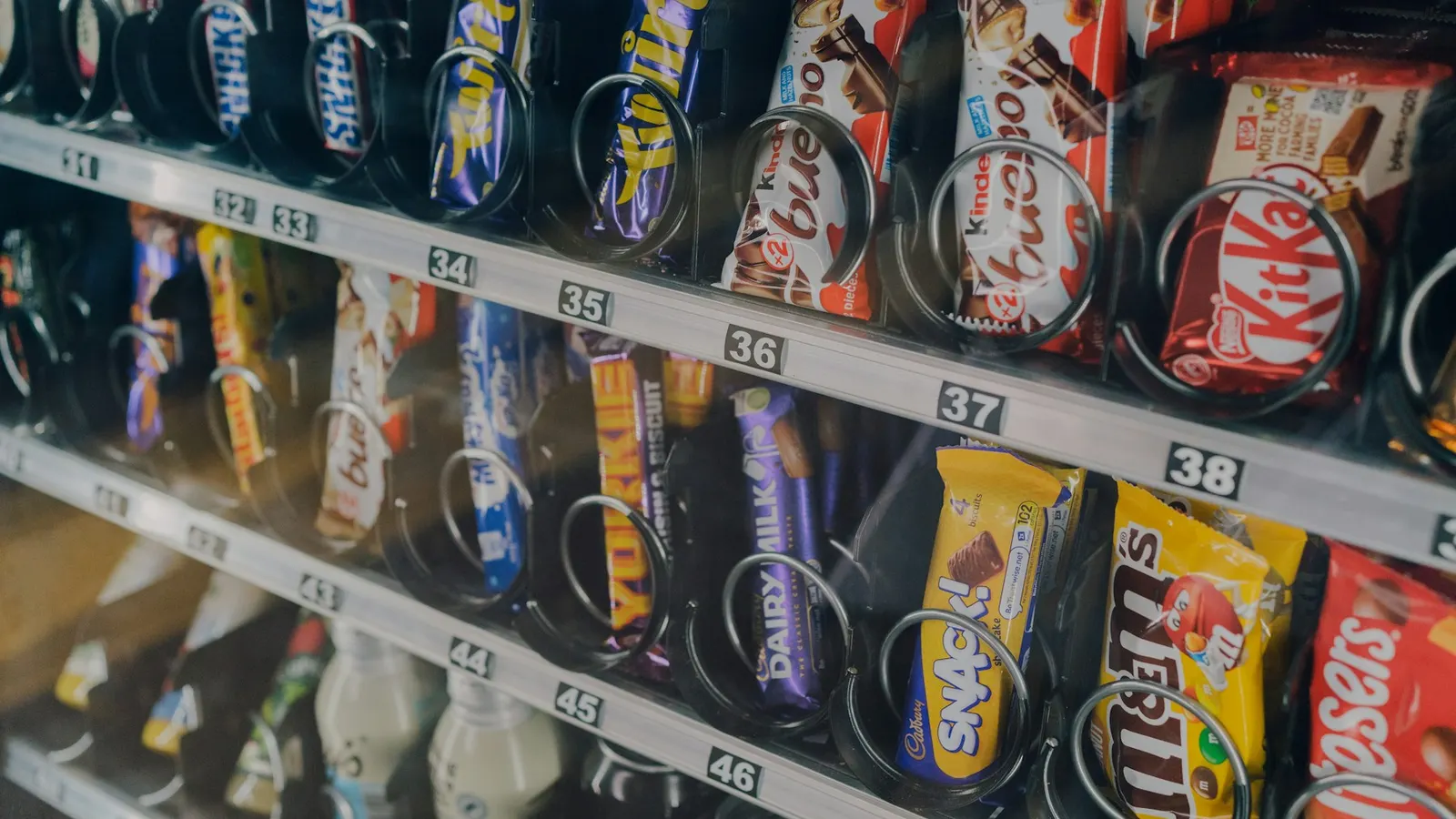
If you searched for what a vending machine costs, you probably found prices for buying one. That’s a different question from the one most office managers and facility leads are asking, which is: what does it cost our business to have vending in the building?
For most workplaces, the honest answer is nothing. Here’s how that works, what you’re responsible for, and where the exceptions are.
How full-service vending is paid for
In full-service vending, the vending company owns the machines and runs them as a small store inside your building. We:
- supply and install the machines,
- choose and stock the products (with input from you),
- restock them through our route drivers and warehouse team,
- handle repairs and refunds, and
- remove the machines if you ever want them gone.
Employees pay for what they buy, by card or cash. Those sales are what pay for the equipment, the products and the service. The business itself doesn’t get a bill.
What your business provides
You’re not paying, but you’re not doing nothing either. A business that wants vending provides:
- Floor space. A spot in or near the break room, on a level floor, with a clear path for a hand truck.
- Power. A standard outlet near the machine. Refrigerated drink and fresh-food machines are happier on their own circuit.
- Access. A way for the route driver to get in during working hours, and a contact person who can tell us when something’s off.
That’s the whole list. No equipment purchase, no stocking, no dealing with jammed coils.
When it costs nothing, and when it’s a conversation
Vending works when enough people use the machines to justify the restocking route. As a rough rule, workplaces with about 50 or more people on site are a good fit for free full-service vending.
Under that, it depends. A 35-person office where everyone’s at a desk all day can use machines more than a 60-person site where most people are out in the field. If you’re on the smaller side, tell us about your location and we’ll give you a straight answer instead of installing a machine that sits half full.
For larger sites, especially ones with multiple shifts or people who need real food, a micro market may be a better fit than a row of machines. We compare the two in Vending Machine or Micro Market?
Subsidies: when the company wants to pay
Some employers want to go further than free-to-the-business. With a subsidy, your company covers part of each purchase so employees pay less at the machine. You decide how big the discount is.
Subsidies are a common way to make vending feel like a perk rather than a convenience, especially for teams working long or overnight shifts where the break room is the only option.
What about buying a machine?
If you were actually pricing out a machine to buy, it’s worth knowing what comes with it. Owning a machine means your business handles purchasing inventory, stocking, pricing, cash and card processing, repairs, and expired product. For most workplaces, that’s a part-time job nobody signed up for, which is why full-service vending exists.
The short version
| Full-service vending | |
|---|---|
| Machines | Supplied and owned by us |
| Stocking and restocking | Our route drivers and warehouse team |
| Repairs and refunds | Handled by us |
| What employees pay | Per item, at the machine |
| What the business pays | Nothing, for most sites with about 50+ people |
| Contract | None |
We serve businesses across Chicago and the suburbs, including Schaumburg, Rosemont, Itasca, Lombard and Bolingbrook. If you’d like to know what would fit your space, get a quote.
Common questions
Is vending service free for businesses?
For most workplaces with about 50 or more people on site, yes. We supply, stock, restock and repair the machines, and employees pay for what they buy. Your business provides the floor space and a standard outlet.
What if we have fewer than 50 employees?
Tell us anyway. Whether a machine makes sense depends on how many people are on site each day and how much it's likely to be used. We'll give you a straight answer instead of installing a machine that sits half empty.
Can our company lower the prices employees pay?
Yes. With a subsidy, your company covers part of each purchase so employees pay less at the machine. You decide how much of a discount to offer.