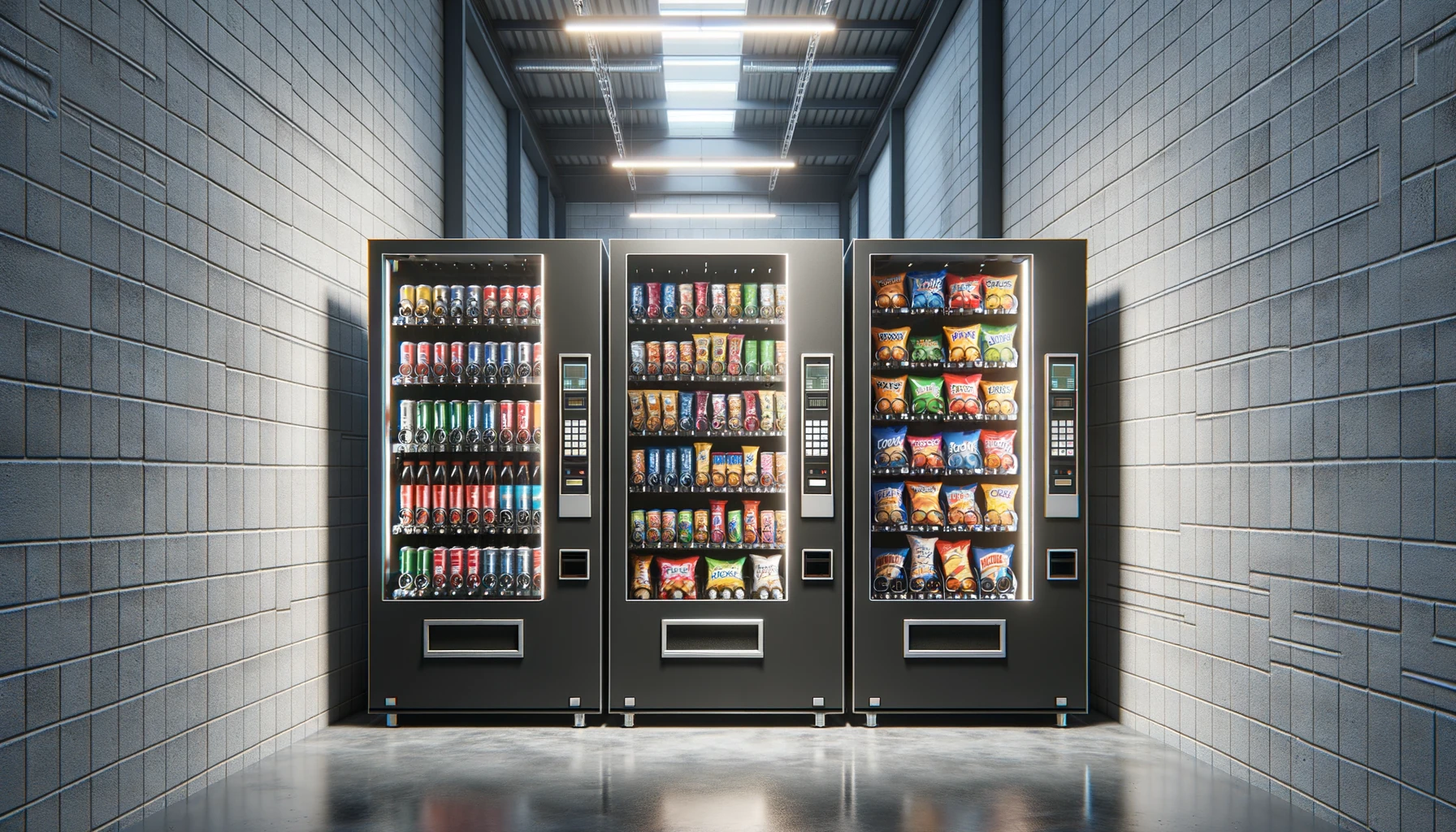
Romeoville is Will County's emerging logistics hub — a concentrated cluster of warehouse and fulfillment operations that has grown significantly in the past decade as the southwest suburban corridor has become an increasingly attractive alternative to older industrial zones closer to Chicago. Magid Glove & Safety employs over 500 people here. RTC Industries runs a similar-scale operation. RJW Logistics and Buske Contract Warehousing maintain multiple warehouse facilities. Lewis University adds an institutional employer with a different workforce profile to the mix. The Renwick Road industrial zone, Weber Road logistics corridor, Creek Parkway distribution hub, and Pinnacle Business Center together house thousands of workers whose jobs require them to be on-site and on-shift. For those employees, a vending machine in the break room isn't a perk — it's the food option. We provide that service to Romeoville's logistics corridor. Tell us about your location and we'll be in touch.
Vending Machine Service in Romeoville, IL
Logistics and fulfillment operations are among the most straightforward vending accounts to understand: high employee counts, shift-based schedules, limited off-site food access, and predictable high-volume consumption. The workers at Magid Glove, RTC Industries, and the RJW and Buske warehouse facilities don't leave the building for a meal during a 10-hour shift. They use what's available in the break room. When that's a properly stocked, reliable vending machine, it's seamless. When it's an empty machine or a unit that goes days between service calls, it's a daily friction point for the people your operation depends on.
Our routes through Will County are built specifically for this corridor — not extended out of a DuPage County base. We restock based on shift patterns — not business-hours schedules — because consumption at a 24/7 fulfillment operation doesn't stop at 5 p.m. The machines we install at logistics and warehouse accounts are configured for physical-labor workforces: high-volume capacity, product mixes weighted toward beverages and filling snacks, and positioning that accounts for shift-change foot traffic.
Romeoville's logistics corridor isn't oversaturated with vending companies, which means there's no service degradation from stretched routes — and we run dedicated coverage here, not occasional reach. When you tell us about your Romeoville operation, we plan around your facility's specific shift schedule, employee count, and location within the corridor.
Micro-Markets in Romeoville, IL
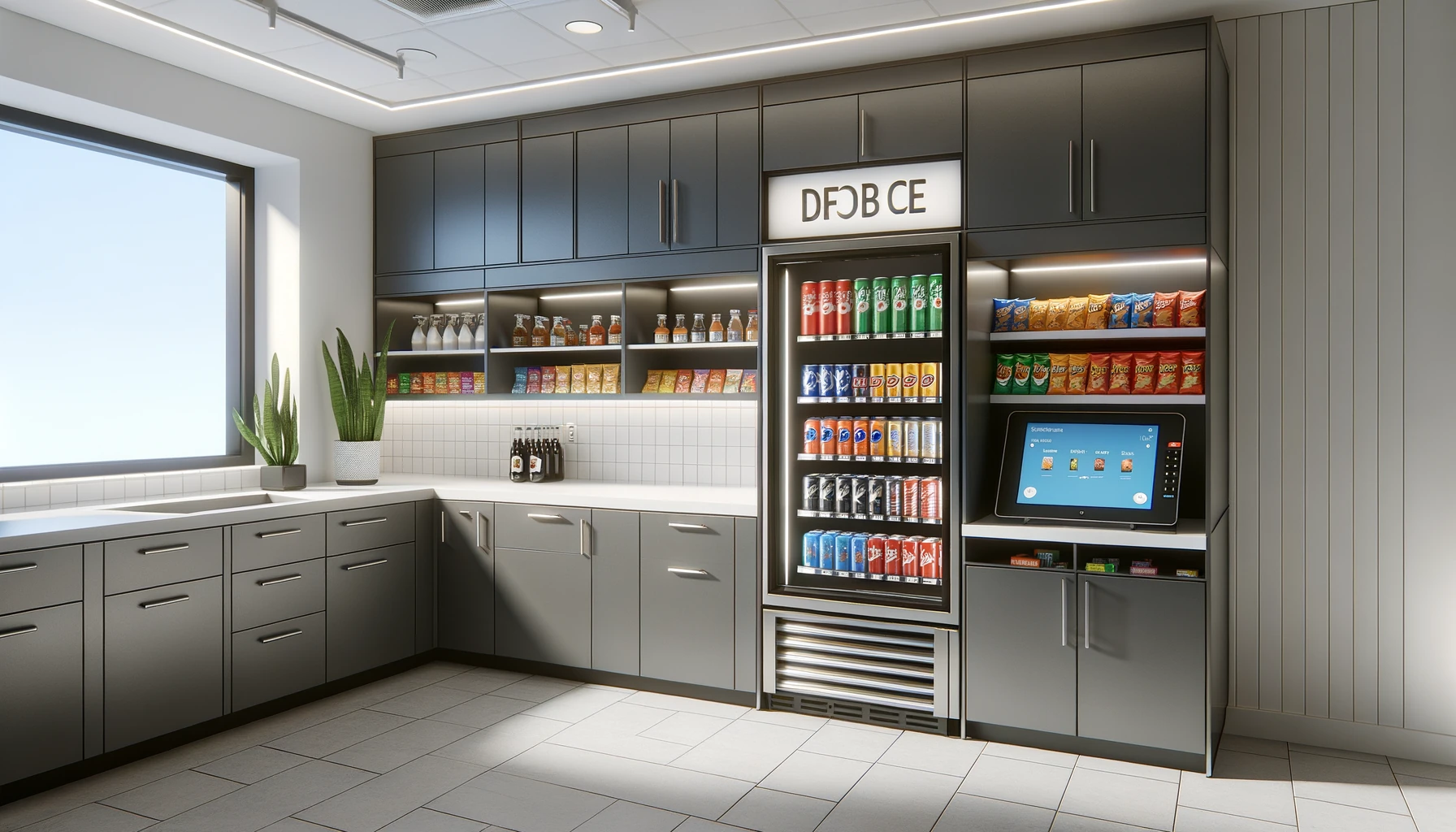
Lewis University brings a distinctly different workforce profile to Romeoville — faculty, administrative staff, and professional employees whose break room expectations look nothing like a distribution warehouse. With 754 employees, Lewis University clears the micro-market threshold by a significant margin, and a university environment where employees spend extended hours on campus is a natural fit for a self-serve market with fresh food and a full drink selection. The product variety and fresh food access that a micro-market provides is a meaningful daily benefit for a workforce that may be eating on campus multiple times a week.
For Romeoville's logistics and warehouse operations — Magid Glove, RTC Industries, the RJW and Buske facilities — traditional vending machines remain the right fit. The economics of a micro-market installation work when you have a stable, office-side population with a dedicated break room. Logistics and warehouse floors are better served by high-volume vending configured for the specific demands of shift work. That's not a downgrade — it's the right tool for the environment.
For facilities with both an office population and a warehouse or production floor — which describes some of the larger Romeoville operations — a hybrid setup is often the right answer. A micro-market in the management and administrative break room, traditional vending accessible to the warehouse floor. Describe your facility layout and we'll tell you which approach makes sense for your specific operation.
What to Expect from Vending Service in Romeoville
Many vending companies that claim coverage of Will County run their primary routes through more established markets — Bolingbrook, Downers Grove, Naperville — and extend into Romeoville as a secondary stop rather than a dedicated route. The practical result is that Romeoville accounts often receive less frequent restocking and slower service response than accounts in the operator's primary territory, even when Will County is technically listed in their coverage area.
We've built specific route density in the Weber Road and Renwick Road zones. Romeoville is a primary stop for us, not occasional reach. There's a single point of contact when something needs attention — not a national call center routing tickets back to a route manager based in another county. For a logistics or warehouse operation where reliable restocking isn't optional, route density is the variable that matters most.
Frequently Asked Questions — Vending Service in Romeoville
How much does vending service cost in Romeoville?
Standard vending service costs nothing directly to the business. We earn revenue through product sales — you provide space and electrical access. For logistics and warehouse accounts in Romeoville, the consistent sales volume from large shift-based workforces supports the service without an equipment fee. A monthly equipment fee for a warehouse or fulfillment placement with real headcount is not standard. Ask us what to expect before agreeing to any fee arrangement.
How quickly can vending machines be installed at our Romeoville facility?
Most accounts can have equipment installed shortly after we agree on the setup. The site visit — 30 minutes, no obligation — confirms machine placement relative to your floor layout, break room access, and shift schedule. For facilities with multiple buildings or shift patterns, that planning step matters more than it does for a single-building office account.
We run a 24/7 operation — how does restocking work?
We build restocking schedules around 24/7 consumption patterns, not business-hours defaults. That means accounting for overnight shift consumption so machines aren't running empty when the night crew hits break. Tell us your shift schedule and we'll factor it into the route planning.
Is Romeoville far enough from Chicago to get reliable service?
Distance from Chicago isn't the variable that matters — route density is. We have established Will County routes through Romeoville rather than treating the area as a geographic edge case. Describe your location and we'll confirm coverage.
Lewis University is here — does that affect the market?
Lewis University is a different account profile from Romeoville's logistics base — institutional employer, campus environment, extended-hour professional staff. It's a natural fit for a micro-market or a vending setup calibrated for a university break room rather than a warehouse floor. If you're affiliated with Lewis University or a similar institutional account in Romeoville, describe your facility and we'll plan around it.
Do we have to sign a long-term contract?
No long-term contract is required. We work on flexible terms that fit logistics and warehouse accounts in Will County. We'll walk you through what's typical for your account type before anything is signed.
Why VendingChicago for Romeoville Businesses
Romeoville's logistics corridor isn't oversaturated with vending companies. We have real capacity for your account and we're not stretched across a saturated market. The setup still needs to be right for your specific operation — a Lewis University account isn't the same as a Magid Glove warehouse, and a 24/7 fulfillment center needs different route planning than a standard business-hours logistics office. We size and stock based on account type, not just geography.
If you also have locations in Bolingbrook, Woodridge, or Aurora, we handle those too. See all Chicago metro areas we cover.
Fill out the form or reach out directly and we'll follow up.
Questions before getting started? Email office@vendingchicago.com. Or go straight to our contact page.